

logossf

MENU

THE SPIRIT OF THE EVENT

The historic rallies are fashionable. During events, such as the European Championship, the competition reigns. In other words, the vehicle must be as fast as possible. So the origin engine parts are generally replaced by a car restoring by more modern parts. Windows in makrolon with sliding openings replace those glasses that closed in the crank. The performances engine improved, the rolling trains are revised with shock absorbers which have nothing to envy to the WRC.

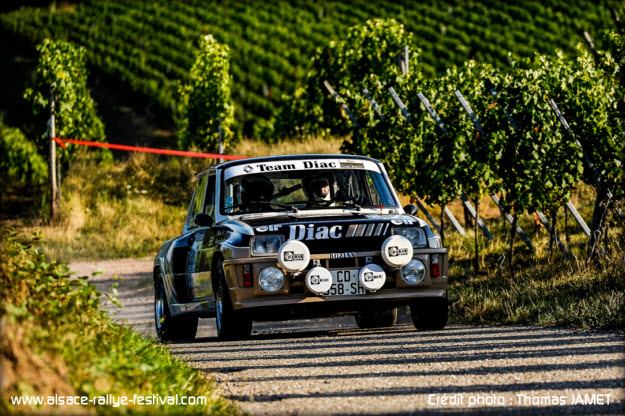
All this, does not correspond to our spirit. If on a Mini Cooper windows were glass, they have to remain so. If the interior was black matt, it not be grey.

Already an essential point begins before restoring the car: the research. How was the car in the past? Old pictures, newspaper articles or movies are so many precious indications, where they are not directly contacts with drivers or mechanics having worked on the old car. Before squeezing the first screw, it is necessary the chase the information on historical documents. On the basis of these elements, try to recreate the original most faithfully as possible. It is the details which make the difference. Many of beautiful restoring is spoiled by details. The drawings or the size of the wheels are vital in the general aspect for example.

The respect of the decoration is another important point. There, also the difference is made on details. It happens that the owner bases itself on small-scale models to reproduce in the scale a former competition car. Still has to be a faithful replica both in the tint of the body that in reproduction of the sponsors. Even there, the best way consists in bases itself on historical documents.  


Detail stratos


Personal sponsors are forbidden. An old Saab of the 60teens with a sticker promoting the last fashionable smartphone would be totally improper. It is also already arrive, that a driver removes the sticker of the old tyres manufacturer because another one proposed him a discount on its products. It is not in line with our philosophy.

The respect of the origin applies also to the mechanics. A ford Escort with a V8 engine would not be accepted. It is obvious that certain points can be modified.  A less sharp camshaft will allow increase the longevity of the engine. Or if a transmission for example will not be founded, it can naturally be replaced by another model. But more and more owners group them together to remake small series of the pieces.

We are larger for the security organs. Rollcage, seats, seatbelts can be replaced by more recent equipment’s. It would be irresponsible to favor the authenticity to the safety.
 

klein


We have experts for every type of cars who known perfectly all the detail of the original model. They would estimate the cars and advise the owners to help them to improve their vehicle as closely as possible to the model of time. 

A word about reconstruction. The word replica is a terms which we do not want to use. Ours cars are not replicas. They are always reconstructed on the basis of a standard car. The rare and real cars of the group B are traded at the moment for near a half-million euros and driving them on rally stages can represent for the owner a financial risk. Actually some embark on a reconstruction. And often it’s a long and expensive operation. We estimate very preciously this reconstruction and if the car gets close to the original they are admitted. An almost complete replica is better than a missing piece of the rally history. Dermott Simpson is a good example. He possesses the real Audi Sport Quattro that Michèle Mouton drove at the RAC on 1984. This car is in his garage at home. But he has reconstructed the same car to run with us by saying himself to us: “If I bang with this car, this upset me, but at least, I shall not have damaged the original of 1984.”

Finally we reserve a quite particular place for the category “B”.  If the car is small or big, popular or famous, if a car presents an international or national interest, this category is made for the car.

 

Slowly Sideways logo 200

FAQ


Is the Alsace Rally Festival a historic regularity event or a speed event?

The Alsace Rally Festival is a "Slowly Sideways" event. This means that it is a demonstration of historic rally cars without time taking, on a closed road. Everyone is free to drive at their own pace.

This philosophy is mainly motivated by the fact that we want to show the diversity of historic cars, including Group B, which is not possible in a speed event.

Is the route published on the organizer’s website beforehand?

No. The route will be published in the program.

Which cars are eligible to enter and what is the car classification?

See the eligible cars.

What is Slowly Sideways?

20 years ago the Klein family started organizing demonstration events in Germany. Since then, their events have continued to grow. Today, Slowly Sideways is present in Great Britain, Belgium, Ireland and since 2016 in France and now Portugal.

For more information, visit http://www.slowlysideways.com/

Are replicas accepted?

Yes and no - we do not check chassis numbers or certificates of conformity. But they must be very good replicas that are as close as possible to the original car. Production cars, on the other hand, are not allowed.

Cars from after 1986 are not allowed. Is this true?

For us, cars from group A, Super1600, WRC, etc. are important cars that have contributed to the history of rallying, and they are welcome. However, they must be original cars. Replicas are only allowed in exceptional cases.

Do I need a license?

The Alsace Rally Festival is not a competition. No license is required to participate, but if you have one it’s better. It’s a medical question, if you don’t have a license, you need to have a medical certificate that you are authorized to drive.

What about insurance?

The rally car must of course be insured to drive on public roads.

Is there an entry fee?

Yes, the entry fee is 710 € or 810 €. It must be paid within 14 days after confirmation of the entry.

Is there a technical inspection?

We mainly check the safety equipment and reserve the right to refuse the start if we feel that it is not sufficient.

What are the points checked?

There are no gas emissions or noise limits to be respected. Helmets are compulsory, as well as fireproof suits, safety hoops, fire extinguishers and harnesses. Fireproof underwear is optional. For us, safety takes precedence over historical interest and safety equipment from the 60s or 70s can be replaced by more recent equipment.

Can I ride on slick tyres?

No, only treaded tyres are allowed.

Do I have to be an experienced driver to participate?

No, however, we would like to point out that our event is not a tourist rally. The roads used are rally stages with inherent difficulties. We recommend that competitors carry out a reconnaissance run in order to fully appreciate these difficulties.

My car is very valuable, what guarantee is there?

Slowly Sideways cannot be held responsible for any damage to the cars. However, we do our best to avoid any damage during static displays. The service park will be monitored.


PARTNER MUNICIPALITIES


Balbronn siteBalbronn

A wine-growing town with over 650 inhabitants, Balbronn is located 25 km west of Strasbourg and is part of the Molsheim district. Already in Merovingian times Balbronn was of some importance, the village being situated on the old road linking the Merovingian palace to the hermitage of Niederhaslach, today called the Holzweg (d'r holzwaj).

The name of the village is said to be of 'Frankish' origin, Baldeburne, this people worshipped the springs, "Burne, Bronn".

Originally, the church was fortified. A sentry walk can still be seen to the north. Balbronn had a castle located outside the fortifications of the. The castle is mentioned in the 15th century. It served as the residence of the bailiff. It was about 20m x 20m, flanked by 4 towers and a drawbridge. After the Thirty Years' War, it became increasingly dilapidated and was demolished in the early 19th century.

For more informations


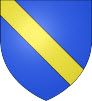
Blason Blienschwiller siteBlienschwiller
Blienschwiller is a commune in the Bas-Rhin department in Alsace in northeastern France.

For more information...


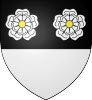
blason bourgheim siteBourgheim

Bourgheim, a small village with a long history. Situated on the banks of the Kirneck on a loessic terrace overlooking the Bruch de l'Andlau, the site has been inhabited since Gallo-Roman times. The ruins of the fortress (burgus), which protected the road and the Kirneck watchtower, served as a base for the construction of the Romanesque church in the 12th century. Archaeological excavations have uncovered numerous remains of potters' settlements from Roman times. During the Carolingian period, potters and glassmakers settled in the village.

Vines have long been cultivated on the slopes of the Piedmont, with cereals and tobacco occupying the lowlands. Since 1954, the local agricultural machinery manufacturing company has had a significant economic and social impact on the development of the village.

For more information

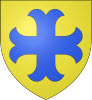
Blason flexbourg siteFlexbourg

Flexbourg, a small village of 490 inhabitants, is situated in the hills of the Vosges, at the bottom of a semi-circular valley. The relief around the village is still very marked by the numerous gypsum quarries that were very active until the end of the 19th century. The commune has a vineyard of 3.5 hectares classified as AOC, included in the “Syndicat du vignoble de la Couronne d'Or” of which it is one of the geographical gateways.

The church of ST HIPPOLYTE was built in 1888 in the neo-Romanesque style with a proud 42 m bell tower that dominates the hills. Listed in the general inventory of cultural heritage, the building of the old school, on the church square, contains remains of the 14th century. The village has some remarkable houses: rue des Seigneurs, small half-timbered houses from the end of the 17th century, a large mansion with a French roof from the end of the 17th century and the former presbytery, the home of a wealthy winegrower built in 1809.

For more information

 
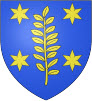
blason gertwiller siteGertwiller

Gertwiller, a wine-growing commune and gingerbread capital, is a village of 1291 inhabitants, situated at the foot of Mont Sainte Odile.

The first known traces of gingerbread date from 1789, imported from Nuremberg. The know-how of the confectioners in this village, situated between the plains and the wine-growing hills, has contributed to making gingerbread a regional gastronomic specialty. Today two companies have continued the tradition.

The Gertwiller vineyard covers some 120 ha, is protected from the prevailing winds by the Vosges mountains, in particular the Maennelstein, and faces south-south east. The clay-siliceous soil allows the production of all the Alsatian grape varieties. Gertwiller benefits from the production rights of Klevener de Heiligenstein. The village now has 16 winegrowers.

For more informations

 
blason goxwiller siteGoxwiller

Goxwiller is a street village, in contact with the agricultural plain and the wine-growing foothills. It is a lowland wine-growing village.

You can admire an old wine press from the 12th century and several public wells, two of which date from the 16th century.

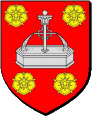
Goxwiller is also the village of wells.

The inventory of architectural heritage shows that Goxwiller is the village in the canton of Obernai that has kept the most wells in place. They are made of sandstone, with circular or square coping walls, superstructures with external posts and straight or arched lintels. The pulleys are made of wood or iron. Some of them bear the date of their installation: 1585, 1712, 1750, 1863, 1867.

The oldest well in the Commune is dated 1585 and bears the arms of the town of Strasbourg, the lord of the village, and the arms of Goxwiller on the curved lintel; the mark of a craftsman and rosettes.

Hélène DE BEAUVOIR, sister of the famous painter Simone DE BEAUVOIR, lived in her house in Goxwiller for 20 years until her death in 2000.

For more informations

 
Blason Heilligenstein siteHeilligenstein

Situated at the foot of Mont Saint-Odile, Heiligenstein is best known for its "Klevener", a grape variety unique to Alsace. Its wine-making vocation dates back to the 3rd century, to Roman times.

The remote origin of the village, perched at an altitude of 250 meters between vineyards and forest, remains a mystery to this day. It took its present name in 1460.

This flowery village enjoys an exceptional location for hiking enthusiasts. It is the starting point of many circuits which allow you to discover breathtaking views of the Alsace Plain. The most courageous hikers can follow the trails of the Club Vosgien to visit, among other things, the Landsberg castle, the pagan wall, the Mont Sainte-Odile...

For more information

Blason NothaltenNothalten
Nothalten is a commune in the Bas-Rhin department in Alsace in north-eastern France.

For more informations

Another demo
Welcome in the demo
Partner municipalities
Bandeau communes partenaires

© 2021 Slowly Sideways France. All Rights Reserved
Eifel Rallyspirit ARF Logo blanc 300 membre SSES